

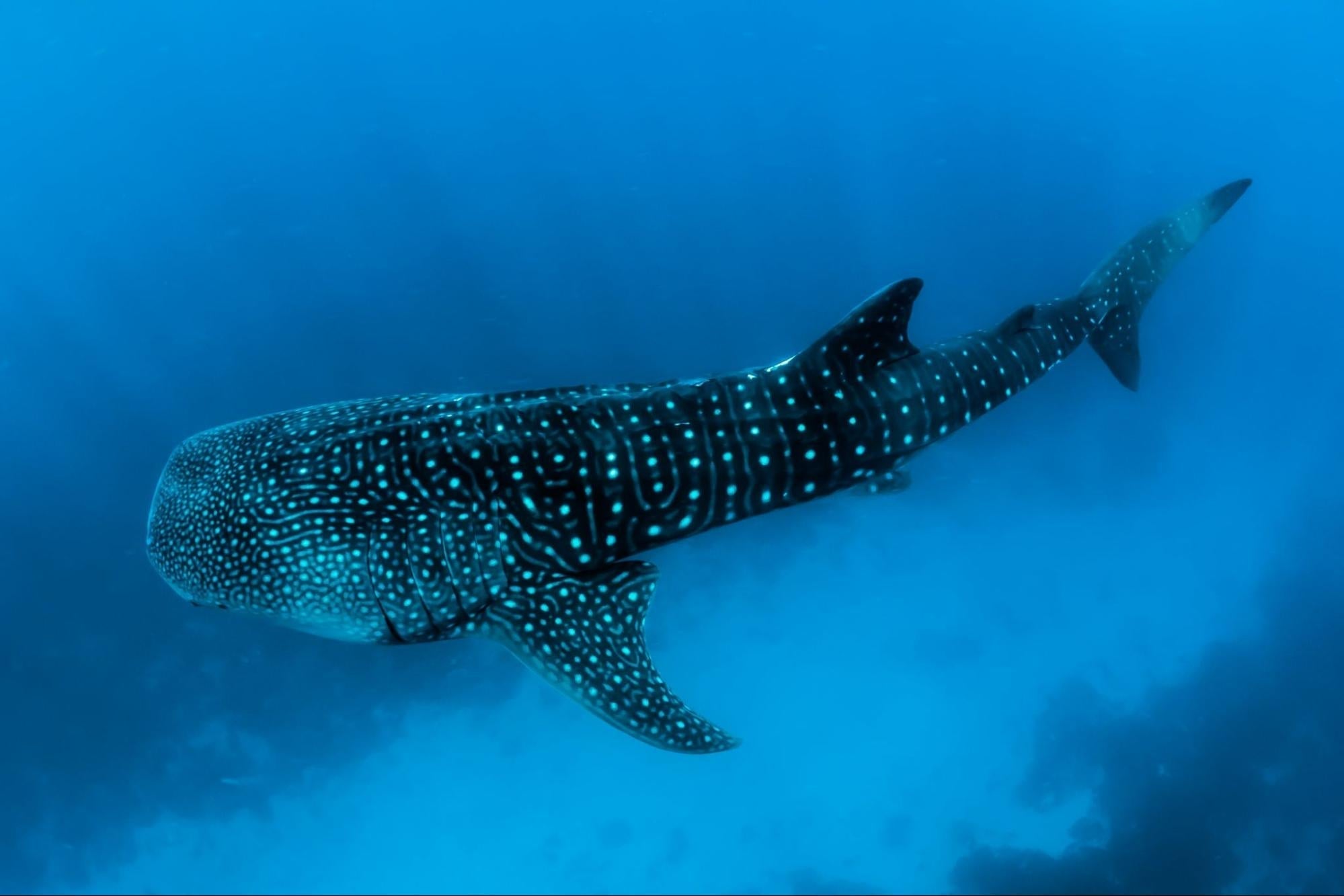
Whale shark encounters are highly location-dependent. Where you go determines not only your chances of seeing them, but also the type of experience you’ll have, from calm surface snorkeling to open-water boat entries.
These animals follow plankton blooms and seasonal feeding patterns, so timing and destination matter more than anything else.
For ocean lovers, finding the best whale shark diving locations is key to maximizing the chances of a magical and responsible interaction.

Mexico (Isla Mujeres & La Paz)
Mexico offers some of the most consistent whale shark encounters, particularly for snorkeling.
- Isla Mujeres (Caribbean side): Large seasonal aggregations, often dozens of whale sharks feeding near the surface
- Season: June to September
- Conditions: Warm water (26–30°C), moderate visibility, occasional surface chop
- Experience level: Beginner-friendly, but requires comfort in open water
Most encounters here are snorkel-based due to the sharks feeding near the surface. Boat traffic can be high during peak season, so operator choice matters.
Ningaloo Reef, Australia
Ningaloo is one of the most regulated and consistent whale shark destinations in the world.
- Season: March to July
- Conditions: Clear water, typically 20–30 meters visibility, mild to moderate currents
- Access: Boat-based tours from Exmouth
- Experience level: Suitable for beginners
Encounters are strictly managed, with limited swimmers per shark and no feeding involved. This results in more natural behavior and controlled interactions.
Maldives
The Maldives offers year-round potential, with stronger seasonal peaks depending on the atoll.
- Best areas: South Ari Atoll
- Season: Peak sightings from May to November
- Conditions: Warm water, moderate visibility, currents can be strong
- Experience level: Intermediate, especially in current
Encounters can happen while diving or snorkeling, though many sightings occur near the surface along reef edges.
Philippines (Oslob & Donsol)
The Philippines offers two very different whale shark experiences.
- Oslob: Year-round sightings due to feeding practices
- Donsol: Seasonal, natural encounters without feeding
Oslob
- High sighting reliability
- Shallow water, beginner-friendly
- Ethical concerns due to artificial feeding
Donsol
- Season: November to June
- Lower sighting consistency, but natural behavior
- Often requires patience and multiple attempts
Choosing between these depends on whether you prioritize guaranteed sightings or natural interaction.

Galápagos Islands
The Galápagos is known for encounters with larger, often female whale sharks.
- Season: June to November
- Conditions: Cooler water (16–24°C), strong currents, deeper dive profiles
- Depth: Typically 15–40 meters
- Experience level: Advanced
Sightings are less predictable compared to Mexico or Ningaloo, but the size and scale of the animals make it a standout destination.
Tanzania (Mafia Island)
Mafia Island offers a quieter, less crowded alternative.
- Season: October to March
- Conditions: Warm water, variable visibility due to plankton
- Experience level: Beginner-friendly
Encounters are usually snorkel-based, with fewer boats compared to more commercial destinations.
Diving vs Snorkeling with Whale Sharks
In most locations, whale shark encounters happen near the surface. This makes snorkeling the primary way to interact with them.
Diving is possible in places like the Maldives or Galápagos, where sharks may pass at depth. However, even in these locations, many encounters still occur during surface intervals.
Choosing between diving and snorkeling depends more on the destination than personal preference.
Conditions That Matter
Whale sharks are found where food is concentrated, which often means:
- Lower visibility due to plankton
- Surface activity rather than deep dives
- Variable conditions, including swell and currents
Clear water is not always a sign of better whale shark diving. In many cases, reduced visibility increases the likelihood of sightings.
Safety and Experience Level
Whale shark encounters are low-risk, but conditions can still be challenging.
- Open water entries are common
- Boat traffic can be high in popular areas
- Strong swimming ability is often required
Even for snorkeling trips, comfort in the ocean is important.
Cost and Practical Considerations
- Mexico and the Philippines: ~$100–$200 per trip
- Australia (Ningaloo): ~$300–$500 per day tour
- Maldives liveaboards: significantly higher depending on itinerary
Additional factors:
- Marine park fees or permits
- Limited daily slots in regulated areas
- Weather-related cancellations
Booking in advance is often necessary during peak seasons.
Responsible Interaction
Whale shark tourism varies widely in how it is managed.
Follow basic guidelines:
- Keep distance (typically 3–4 meters)
- Do not touch or block movement
- Avoid flash photography
- Follow guide instructions at all times
Choosing operators that follow local regulations makes a significant difference to both safety and conservation.

Conclusion
The best whale shark destination depends on what you prioritize.
If you want consistent sightings in calm conditions, Mexico and Ningaloo are strong options. If you are looking for more challenging conditions with the possibility of larger animals, the Galápagos or Maldives may be a better fit.
Understanding seasonality, conditions, and operator practices will have more impact on your experience than the destination name alone.
FAQs
Do I need scuba certification to see whale sharks?
No. Most encounters are done while snorkeling.
Are sightings guaranteed?
No. Even in peak locations, sightings depend on natural conditions.
Is it safe to swim with whale sharks?
Yes. They are filter feeders and not aggressive, but conditions and boat activity require awareness.
What is the best time to go?
It depends on location. Each destination has a defined season linked to feeding patterns.
DiveBookings.com is a trusted platform for scuba diving trips, courses, and global dive experiences. Our editorial team works closely with certified dive professionals and verified operators to deliver content that meets high standards of safety, accuracy, and expertise.


