

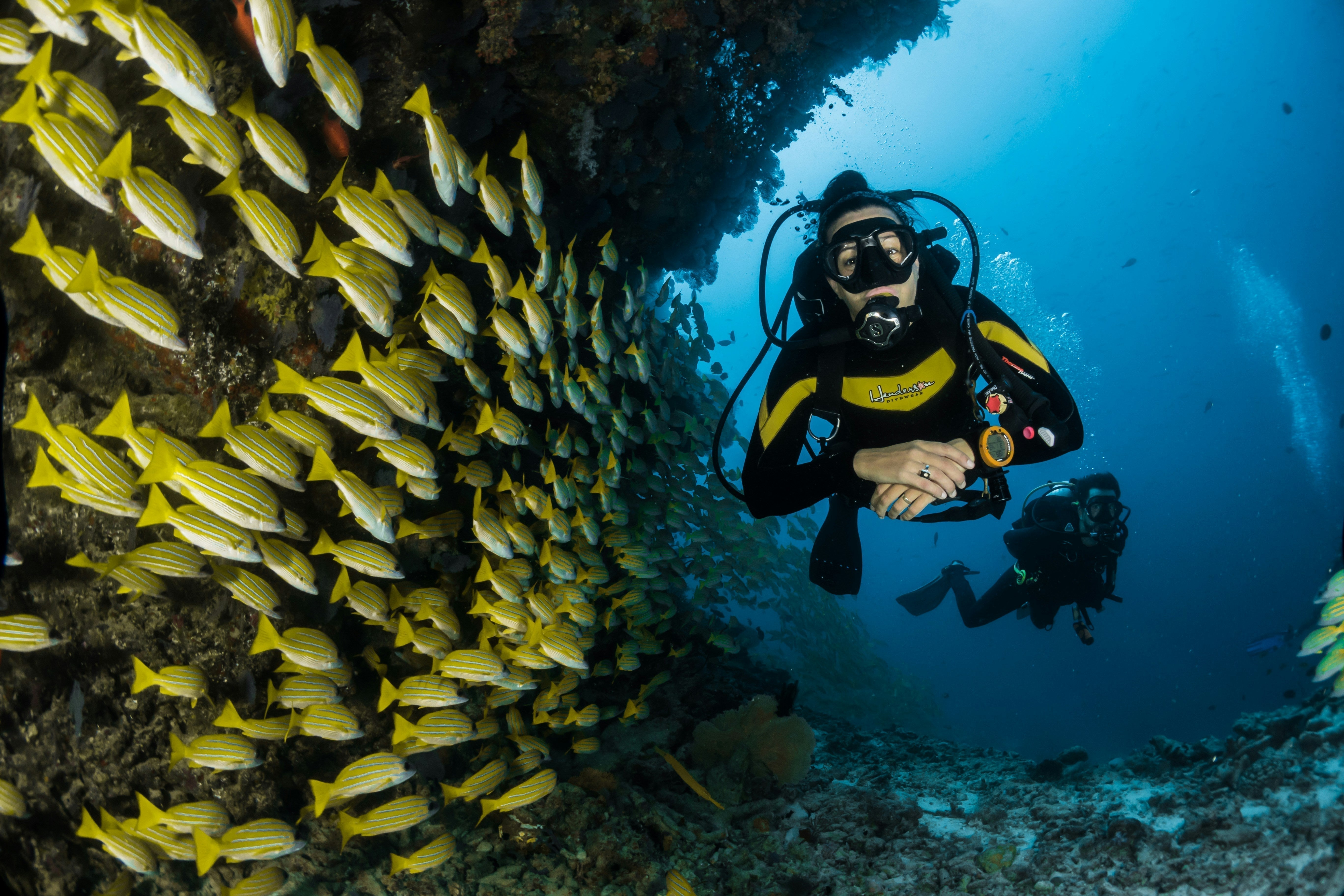
For many people, scuba diving begins with a simple question: what's it actually like to breathe underwater?
The answer is surprisingly straightforward. With proper training and equipment, scuba diving allows you to explore an environment that covers more than 70% of our planet. Coral reefs, shipwrecks, marine life, underwater cliffs, and even entire ecosystems become accessible in a way that's impossible from the surface.
If you're considering your first dive or researching a scuba certification course, understanding how scuba diving works, what training involves, and what to expect can help you take the first step with confidence.

What Is Scuba Diving?
Scuba diving is a form of underwater diving that uses a self-contained breathing system, allowing divers to breathe while submerged.
The term SCUBA stands for: Self-Contained Underwater Breathing Apparatus
Unlike snorkeling, where you remain at the surface and breathe through a tube, scuba diving allows you to descend underwater and stay there for extended periods while exploring dive sites.
Modern scuba equipment supplies breathing gas from a tank carried on the diver's back. A regulator delivers air at the correct pressure, making breathing underwater feel remarkably natural after a short adjustment period.
Today, scuba diving is practiced recreationally in destinations around the world, from tropical coral reefs and shipwrecks to freshwater lakes and underwater caves.
How Does Scuba Diving Work?
The idea of breathing underwater may sound complicated, but the equipment is designed to make the process simple.
A scuba cylinder contains compressed breathing gas, which for most recreational dives is standard compressed air. The regulator reduces that pressure and delivers air whenever the diver inhales.
As you descend, water pressure increases. The regulator automatically adjusts to match the surrounding pressure, allowing you to breathe comfortably at different depths.
Another important piece of equipment is the Buoyancy Control Device (BCD). By adding or releasing air from the BCD, divers can control whether they float, sink, or remain neutrally buoyant in the water.
Learning buoyancy control is one of the most important skills in scuba diving. Good buoyancy not only improves comfort and air consumption but also helps protect delicate marine environments.

What Equipment Do You Need for Scuba Diving?
Most beginner courses provide rental equipment, so purchasing gear isn't necessary before certification. However, understanding the basics can make your first dive experience less intimidating.
Scuba Cylinder
The cylinder stores compressed breathing gas used during the dive.
Regulator
The regulator delivers breathable air from the cylinder and includes a backup air source for emergencies.
Buoyancy Control Device (BCD)
The BCD helps divers manage buoyancy and maintain comfortable positioning underwater.
Dive Mask
A mask creates an air space in front of your eyes, allowing you to see clearly beneath the surface.
Fins
Fins help divers move efficiently through the water while conserving energy.
Exposure Protection
Depending on water temperature, divers may wear a wetsuit or drysuit for warmth and protection.
Dive Computer
A dive computer tracks depth, bottom time, ascent rates, and other information that helps divers stay within safe limits.

Is Scuba Diving Safe?
When conducted within established training standards, scuba diving is considered a safe recreational activity.
Like any adventure sport, risks exist. However, modern training systems, equipment standards, and dive planning procedures are specifically designed to manage those risks.
New divers learn essential safety practices, including:
- Never holding your breath underwater
- Monitoring air supply regularly
- Ascending slowly
- Performing pre-dive equipment checks
- Diving within certification limits
- Using the buddy system
One of the reasons scuba training is so structured is that safety skills are introduced gradually and practiced repeatedly before divers enter open water.

Do You Need to Be a Strong Swimmer?
This is one of the most common questions beginners ask.
You do not need to be a competitive swimmer or athlete to become a scuba diver. However, certification agencies require a basic level of water comfort and swimming ability.
Requirements vary slightly between training organizations, but most entry-level courses include a swim assessment and a floating or treading-water exercise.
Many successful divers describe themselves as average swimmers before beginning their training.
Are There Any Medical Requirements?
Before enrolling in a scuba certification course, you'll be asked to complete a medical questionnaire.
Certain medical conditions may require clearance from a physician before diving. Conditions that commonly require additional evaluation include:
- Asthma
- Certain heart conditions
- Lung disorders
- Recent surgeries
- Some neurological conditions
Most healthy individuals can participate in scuba diving, but it's important to answer medical questions honestly and follow guidance from instructors and healthcare professionals.
How to Get Scuba Certified
If you want to dive independently, you'll need a recognized scuba certification.
The most common beginner certification is the Open Water Diver course.
Several major training organizations offer equivalent entry-level programs, including:
While course structures differ slightly, the core skills and safety standards are similar.
A typical Open Water course includes:
Knowledge Development
Students learn diving physics, physiology, equipment operation, safety procedures, and dive planning.
Confined Water Training
Skills are practiced in a swimming pool or controlled environment before entering open water.
Open Water Dives
Students demonstrate their skills during supervised dives in the ocean, lake, or quarry.
Many certification courses can be completed over several days, although flexible schedules and online learning options are increasingly common.

What Happens on Your First Scuba Dive?
Most first-time divers are surprised by how calm the experience feels.
Your instructor will begin with a briefing covering equipment, hand signals, and safety procedures.
After entering the water, you'll practice a few basic skills before gradually descending. Early dives are conducted in shallow conditions that allow beginners to focus on breathing, buoyancy, and comfort.
The first few breaths underwater often feel unusual. Within minutes, however, most new divers adapt and begin focusing on the underwater environment around them.
Should You Learn Locally or While Traveling?
There isn't a single right answer.
Learning Locally
Completing certification close to home allows you to train without vacation time pressures and often provides greater scheduling flexibility.
Learning on Vacation
Popular diving destinations often offer warm water, good visibility, and calm conditions that many beginners find appealing.
The best option depends on your schedule, budget, and travel plans.
Popular Destinations for Beginner Divers
Certain destinations have built strong reputations for entry-level scuba training.
Koh Tao, Thailand
Known for its large number of dive schools and competitive course pricing.
Bali, Indonesia
Offers warm water, diverse dive sites, and opportunities to continue diving after certification.
Bonaire
Well known for calm conditions and easy shore diving access.
Great Barrier Reef, Australia
Provides access to one of the world's most famous reef systems.
Maldives
Offers excellent water temperatures and stunning reef environments, though some sites are better suited to experienced divers due to currents.
When selecting a destination, consider instructor quality, safety standards, water conditions, and overall travel logistics rather than focusing solely on price.
How Much Does Scuba Certification Cost?
Certification costs vary by destination, training organization, and what's included in the package.
Typical ranges include:
- Discover Scuba Diving experience: USD $50-$150
- Open Water certification course: USD $300-$700
- Personal equipment purchases: Variable
- Dive insurance: Optional but recommended in many destinations
Courses in Southeast Asia are often less expensive than those in Australia, Europe, or North America.
Before booking, confirm whether equipment rental, certification fees, study materials, and boat trips are included in the advertised price.
Can You Fly After Scuba Diving?
Yes, but not immediately.
Diving increases the amount of dissolved nitrogen in the body. Flying too soon after diving can increase the risk of decompression sickness.
Most training agencies recommend waiting at least:
- 18 hours after a single no-decompression dive
- 24 hours after multiple dives or multiple diving days
This is an important consideration when planning dive holidays and return flights.
Why People Continue Diving Long After Certification
For many divers, certification is just the beginning.
Some become interested in underwater photography. Others progress into wreck diving, night diving, deep diving, or liveaboard adventures. Many simply enjoy the opportunity to experience marine environments in a more immersive way.
The appeal of scuba diving often comes from its variety. No two dive sites are exactly alike, and even familiar locations can look completely different from one day to the next.
Final Thoughts
Scuba diving is one of the most accessible ways to explore the underwater world. With proper training, modern equipment, and a commitment to safe diving practices, beginners can quickly develop the skills needed to dive confidently.
Whether you're planning a tropical diving holiday or considering a local certification course, understanding the fundamentals will help you make informed decisions and get more from your first underwater experiences.
If you're ready to start diving, DiveBookings helps you compare dive centers, discover beginner-friendly courses, and book scuba diving experiences in destinations around the world.
Frequently Asked Questions
What does SCUBA stand for?
SCUBA stands for Self-Contained Underwater Breathing Apparatus.
How deep can beginners scuba dive?
Most entry-level Open Water certifications allow divers to dive to a maximum depth of approximately 18 metres (60 feet), depending on the training organization.
How long does it take to get scuba certified?
Many Open Water courses can be completed within several days, although timing varies depending on the training schedule and learning format.
Do I need to buy scuba equipment before learning?
No. Most dive schools provide rental equipment as part of their training programs.
Is scuba diving safe for beginners?
Yes. When conducted under professional supervision and within established training standards, scuba diving is considered a safe recreational activity.
Can I scuba dive if I wear glasses?
Yes. Many divers use prescription masks or wear contact lenses while diving.
What age can you start scuba diving?
Many certification agencies offer junior programs starting around age 10, though requirements vary.
Which scuba certification agency is best?
PADI, SSI, NAUI, and SDI all offer widely recognized entry-level certifications. The quality of instruction is often more important than the agency itself.
DiveBookings.com is a trusted platform for scuba diving trips, courses, and global dive experiences. Our editorial team works closely with certified dive professionals and verified operators to deliver content that meets high standards of safety, accuracy, and expertise.


