

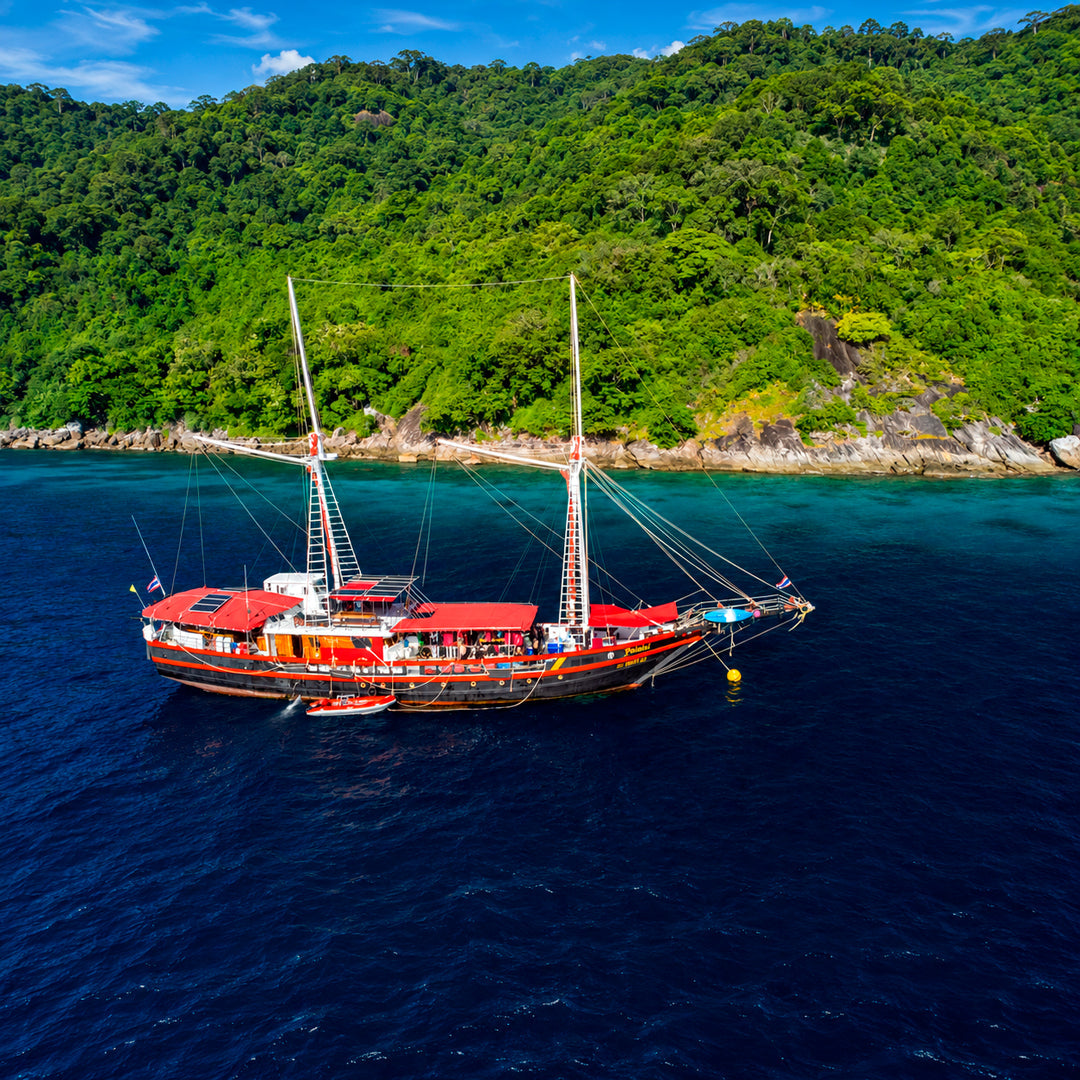
A Thailand liveaboard completely changes the rhythm of a diving trip. Instead of travelling to a dive site each morning, you wake up close to the water, complete several dives throughout the day, and spend evenings on board while the boat moves toward the next part of the itinerary. For divers who want to explore sites that are difficult to reach on day trips, this style of travel can make several days feel like one continuous expedition.
Thailand is particularly suited to liveaboard diving because its dive areas are spread across the Andaman Sea, with routes commonly visiting destinations such as the Similan Islands, Koh Bon, Koh Tachai, and Richelieu Rock. Exact itineraries vary by operator, season, weather, and departure port, so checking the current route is an important part of planning.

What Makes a Thailand Liveaboard Different?
A liveaboard combines accommodation, meals, transportation, and diving in one trip. Rather than returning to a resort after each dive, divers remain on the vessel throughout the journey.
This creates more time underwater and reduces the daily transfers associated with shore-based diving. A typical trip may include multiple dives each day, depending on the itinerary, conditions, certification requirements, and operator schedule.
The experience is also more structured than a conventional holiday. Dive briefings, meals, surface intervals, equipment preparation, and rest periods become part of the daily routine. For experienced divers, this rhythm can be one of the most appealing aspects of a liveaboard.
A Typical Day on Board
There is no single schedule followed by every boat, but a multi-day Thailand liveaboard commonly revolves around an early morning dive, breakfast, another dive, lunch, an afternoon dive, and sometimes a night dive.
The first dive can begin relatively early, when conditions and the itinerary allow. After the briefing, divers enter the water in small groups and return to the boat for breakfast or a surface interval.
A second dive may follow later in the morning. Between dives, divers usually have time to rest, photograph the surroundings, review their previous dive, or simply relax on deck.
Afternoons can bring another dive, depending on the route. Some itineraries include a fourth or night dive, while others focus on three daytime dives. The exact number should always be confirmed with the operator because current, weather, site restrictions, and travel time between locations can affect the schedule.
The result is a day built around diving rather than sightseeing.
Exploring Thailand's Andaman Sea
Many Thailand liveaboards operate in the Andaman Sea, where several well-known dive areas can be incorporated into multi-day routes.
The Similan Islands are known for granite formations, reef environments, and a range of underwater terrain. Depending on the site and conditions, divers may encounter boulder formations, coral-covered surfaces, channels, and schooling reef fish.
Further north, Richelieu Rock is one of the region's best-known dive sites. The submerged pinnacle attracts a variety of marine life and is often included on itineraries focused on northern Andaman Sea diving.
Koh Bon and Koh Tachai may also appear on selected routes. These sites can offer different underwater environments from the Similans, giving a multi-day trip greater variety.
Note: Koh Tachai access is subject to periodic restrictions; check current status with your operator before booking.
However, marine encounters are never guaranteed. Visibility, currents, water temperature, season, weather, and natural animal behaviour can all influence what divers see on a particular trip.
Conditions Divers Should Expect
Thailand's Andaman Sea is tropical, but diving conditions can still vary considerably.
Water temperatures are generally warm enough for many divers to use a relatively thin wetsuit, although individual comfort varies. Visibility can be excellent on some dives but may decrease because of plankton, currents, weather, or local conditions.
Currents are another important consideration. Some sites are suitable for a broad range of certified divers, while exposed pinnacles and sites with stronger or changing currents may require better buoyancy control and appropriate experience.
Depth also varies significantly from one dive site to another. Divers should check the maximum depth and site profile before the trip and remain within the limits of their certification and experience.
A liveaboard is therefore not simply about collecting as many dives as possible. It is about choosing an itinerary that matches your experience and comfort level.

Who Should Consider a Thailand Liveaboard?
Liveaboards can be particularly attractive to certified divers who want several consecutive days of diving without spending time travelling between a hotel and dive centre.
They can also suit underwater photographers and divers interested in exploring multiple sites during one trip. Staying on the boat allows more time at remote locations and can provide repeated opportunities to dive the same area under different conditions.
However, not every itinerary is appropriate for every diver. Some routes may include deeper sites, stronger currents, negative entries, or more demanding conditions. Divers should review certification requirements, minimum experience requirements, and recent-dive policies before booking.
Beginners may have suitable options on some boats, but a liveaboard should not automatically be assumed to be beginner-friendly. If you are newly certified, ask the operator whether the specific itinerary matches your experience.
Life Between the Dives
One of the less obvious pleasures of liveaboard diving is the time between dives.
Instead of spending the surface interval inside a resort or travelling through traffic to another pier, you can sit on the deck, watch the islands pass by, or talk with other divers about the previous dive.
Meals are another central part of the experience. Most liveaboards provide scheduled meals throughout the day, with the exact menu and dining arrangements depending on the boat.
Cabins also vary considerably. Some vessels offer simple shared accommodation, while others have private cabins with additional space and amenities. When comparing Thailand liveaboards, accommodation should be considered alongside the diving itinerary rather than treated as a secondary detail.
Choosing the Right Route
The most important decision is often the itinerary rather than the boat itself.
Consider which dive areas you want to visit, how many nights you want to spend on board, the number of planned dives, and the level of experience required.
Departure logistics matter too. Boats may leave from different ports, and transfers from airports or hotels may be included on some trips but not others. Check the departure time carefully, particularly if you are arriving in Thailand on the same day.
It is also worth checking what is included in the advertised price. Depending on the operator, the package may or may not include equipment rental, national park fees, marine park fees, transfers, drinks, nitrox, or other extras.
Comparing the total trip cost rather than only the headline price gives you a clearer picture of what you will actually spend.
When to Go Diving
Thailand's Andaman Sea liveaboard season is influenced by the southwest monsoon. Many liveaboard operations in the Similan region are seasonal, with schedules generally concentrated during the months when conditions are more suitable for regular operation.
The exact season can change by location and operator, and weather conditions can affect individual departures. Before booking, check the current operating season and itinerary availability rather than relying solely on a general monthly guide.
This is particularly important for divers planning around a specific site such as Richelieu Rock or the Similan Islands.
Keen to explore our Thailand Liveaboard Dive?
What to Pack
Packing for a liveaboard requires a little more thought than packing for a resort-based dive holiday.
Bring your certification card, dive computer, mask, exposure protection suitable for the expected water temperature, reef-safe personal essentials, and any specialist equipment you normally use.
A surface layer is also useful because conditions on deck can feel different after repeated dives. Seasickness medication may be worth discussing with a medical professional if you are prone to motion sickness.
Space can be limited in cabins, so avoid bringing unnecessary luggage. Confirm the operator's equipment and luggage requirements before departure.

The Rhythm of a Multi-Day Dive Trip
The defining feature of Thailand liveaboards is their rhythm. Wake, dive, eat, rest, dive again, and watch the landscape change as the boat moves between sites.
By the final day, the individual dives begin to form a larger experience: different reefs, changing conditions, new marine encounters, and conversations with divers who shared the same route.
For divers who enjoy spending several days focused almost entirely on the underwater world, a liveaboard can provide a practical way to explore remote Andaman Sea sites while keeping the journey itself part of the adventure.
The key is to choose the route according to your certification, experience, preferred dive conditions, budget, and travel schedule. With those details matched properly, the days on board become more than a sequence of dives they become a complete diving journey through Thailand's Andaman Sea.
FAQs
1. What are Thailand liveaboards?
Thailand liveaboards are dive boats that provide accommodation, meals, and access to multiple dive sites during a multi-day trip.
2. How many dives are typical on a liveaboard?
Many trips schedule around three daytime dives per day, with some itineraries offering an additional night or fourth dive.
3. Are Thailand liveaboards suitable for beginners?
Some are, but requirements vary. Beginners should check the specific itinerary, site conditions, certification requirements, and experience rules before booking.
4. What dive areas can liveaboards visit?
Depending on the route, liveaboards may visit the Similan Islands, Koh Bon, Koh Tachai, and Richelieu Rock.
5. What should I check before booking?
Check the itinerary, departure port, number of dives, experience requirements, accommodation, inclusions, additional fees, and current operating season.


