

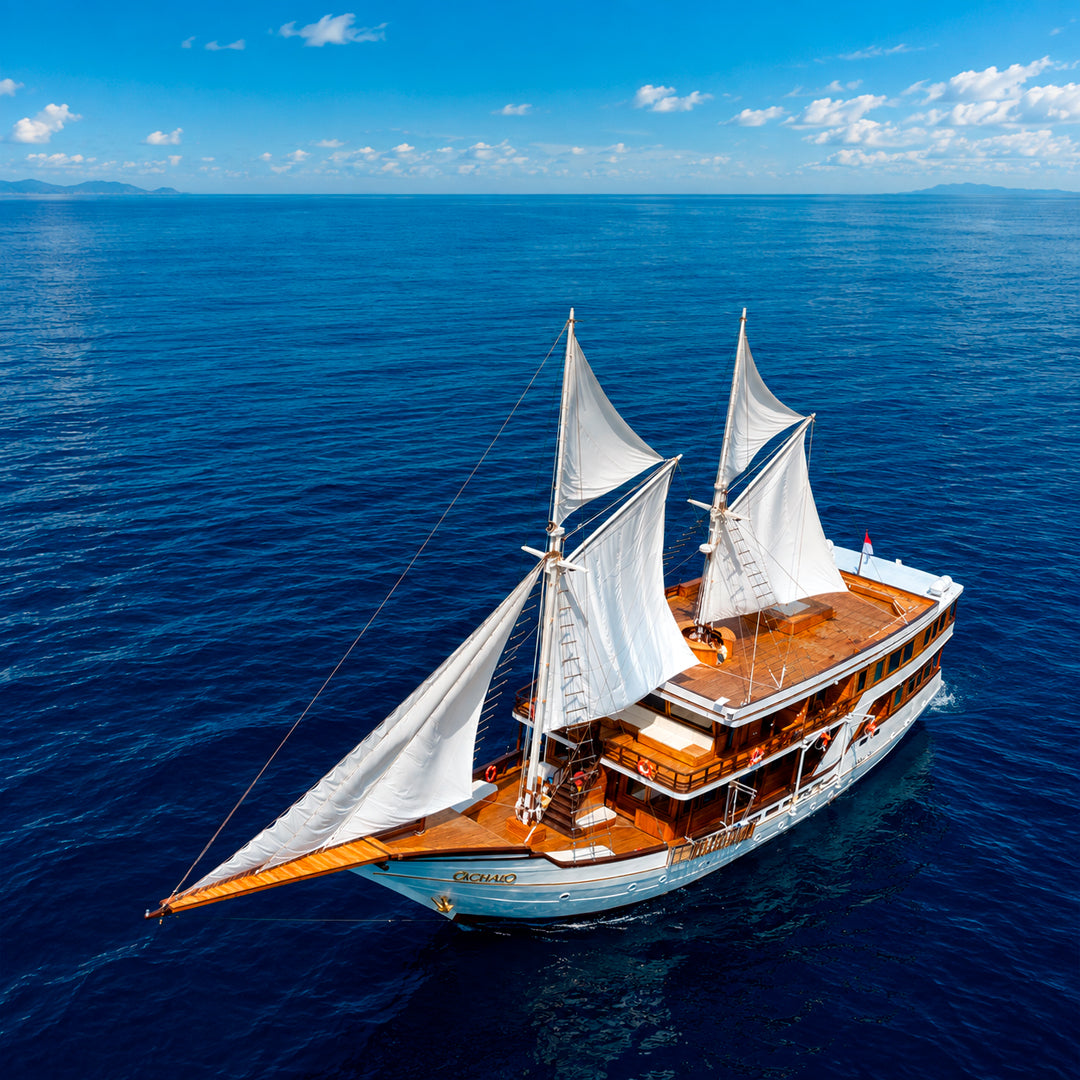
There are places divers talk about the way others talk about Everest or the Sistine Chapel. Places that become a benchmark, something you work toward. For serious divers, Raja Ampat in Indonesia is that place.
Located in the remote West Papua region of Indonesia, Raja Ampat is home to more marine species than anywhere else on Earth. Scientists have recorded more than 550 coral species and over 1,500 fish species in these waters, figures that dwarf every other diving destination on the planet. The Coral Triangle begins here. The richest reefs on the planet are here.
And the only real way to experience diving Raja Ampat, Indonesia properly is on a liveaboard.

Why a Liveaboard is Essential for Raja Ampat
Raja Ampat covers roughly 50,000 square kilometres of ocean and hundreds of islands. The best dive sites are spread across four main regions; Central, North, South, and East …many of which are hours apart by boat.
Shore-based diving from Sorong or a local resort gets you to some sites. But it doesn't get you to Wayag, or deep into Misool, or to the legendary sites of the Dampier Strait without spending half your day in transit.
A liveaboard fixes all of that. You sleep where you dive. You wake up moored beside a reef that took two hours to reach overnight. You do three or four dives a day across regions that a day-tripper would never see. For a destination this size and this remote, it's genuinely the only way to do it justice.
The Four Diving Regions
Central Raja Ampat: The Dampier Strait
The most popular and consistently dived region. The Dampier Strait separates Waigeo and Batanta islands and funnels nutrient-rich currents through a corridor that's absolutely packed with marine life.
Cape Kri holds the world record for fish diversity on a single dive; ichthyologist Dr. Gerry Allen documented 374 species in one 90-minute dive here. The reef wall drops from the surface and the fish density has to be seen to be believed.
Sardine Reef (Arborek) is named for the enormous schools of sardines that swarm the reef. Manta rays, reef sharks, and jacks follow the bait. One of the most consistently spectacular dives in Raja Ampat.
Blue Magic is a seamount that acts as a cleaning station and feeding spot for manta rays, wobbegong sharks, and schooling fish. Currents can be strong but the payoff is exceptional.
Melissa's Garden is a signature soft coral garden in the shallows near Penemu. One of the most photographed sites in Raja Ampat for good reason. The colour density here is extraordinary.
One thing to know about the Dampier Strait: it can produce strong, rapidly shifting currents. Several sites are best suited to experienced divers who are comfortable in moving water. Your guide will brief you well, but don't understate your experience level when you book.
North Raja Ampat: Wayag and Beyond
The north is wilder, more remote, and frankly more dramatic both above and below the water. The karst limestone islands of Wayag rise from impossibly blue water in the kind of landscape that makes you question whether you've accidentally stepped into a screensaver.
Underwater, the north offers deep walls, pristine reefs, and the kind of untouched coral that comes from genuinely limited visitor numbers. Most liveaboards include the north on 10 to 12 night itineraries, overnighting the passage north and spending two or three days in the region before returning south.
Wayag Lagoon delivers topside scenery that's hard to overstate. Below water the lagoon reefs are healthy and largely undisturbed, with reef sharks and abundant fish life.
Pianemo is another iconic northern site combining dramatic above-water karst formations with prolific reef life below.
South Raja Ampat: Misool
Misool is the jewel of the south. A large island surrounded by a protected marine reserve with some of the densest soft coral growth in the world. The reefs here have been under community management for over a decade and it shows. They're some of the healthiest in the region.
Magic Mountain has become legendary among manta ray enthusiasts. Mantas gather here to feed and be cleaned, and encounters are reliable during the right season.
Boo Windows offers twin swim-throughs framed by walls of vivid soft coral. One of the most visually stunning dives in the region and genuinely one of those dives you'll remember for years.
Fiabacet is a macro photographer's paradise. The muck diving here turns up rare and remarkable small species that most divers never encounter anywhere else.
Worth knowing: Misool is only accessible on longer 10 to 14 night itineraries. If it's a priority for you, check the specific route carefully before booking.
East Raja Ampat
The least visited region and still largely unexplored. Some liveaboards include eastern sites on extended itineraries. If you're planning a second or third Raja Ampat trip and want to go somewhere most visitors never reach, this is your answer.

What You'll See Underwater
Raja Ampat's biodiversity isn't marketing language. It's documented scientific fact. In practice, a routine reef dive here produces sightings that would be highlights anywhere else on Earth.
Regular encounters include wobbegong sharks (endemic to the region), pygmy seahorses in multiple species, walking sharks (epaulette sharks found almost nowhere else on the planet), manta rays both reef and oceanic, blacktip and whitetip reef sharks, nudibranchs in extraordinary variety, cuttlefish and octopus, massive schools of barracuda, trevally and snapper, dugongs in seagrass areas, and whale sharks seasonally.
The coral itself is genuinely the headline. Soft coral growth in Raja Ampat, particularly in Misool and parts of the Dampier Strait, reaches densities and colours that experienced divers describe as unlike anything else they've ever seen.
Costs: What to Budget
Raja Ampat is not a budget destination. The remoteness, fuel costs, park fees, and the quality of the experience mean liveaboard prices are significantly higher than Thailand or Bali.
Budget liveaboards (7 nights): USD $1,800 to $2,500 / AUD $2,600 to $3,600
Mid-range liveaboards (7 to 10 nights): USD $2,500 to $4,500 / AUD $3,600 to $6,500
Luxury liveaboards (10 to 14 nights): USD $5,000 to $9,000+ / AUD $7,200 to $13,000+
Additional costs that catch people off guard:
Raja Ampat Marine Park PIN fee: approximately USD $200 to $255 per person per trip, paid separately in cash (IDR only). This one surprises a lot of first-time Raja Ampat visitors. It's mandatory and it's not small.
Dive insurance is mandatory with most operators. Budget for this if you don't already hold it.
Equipment rental, nitrox, gratuities for crew, and drinks are typically charged separately.
Flights to Sorong: most liveaboards depart from Sorong. You'll need domestic Indonesian flights from Bali or Jakarta. Book these well in advance, particularly during peak season when capacity is tight.
Best Time to Go
October to April is the primary diving season. Calmer seas, better visibility (often 15 to 30 metres), and more predictable conditions make this the window most liveaboards prioritise.
May to September brings the southeast monsoon. Conditions are more variable and some operators reduce or suspend itineraries. The Central region tends to remain more diveable through the shoulder season than the north or south.
Manta rays are most reliably sighted from October to April in the southern regions around Misool. Blue Magic in the Dampier Strait produces sightings year-round but peaks in the cooler, more current-active months.
How to Choose Your Liveaboard
Trip length: 7 nights covers the central region well. 10 nights allows the north (Wayag) or south (Misool) to be added. 12 to 14 nights gets you both. If this is your first Raja Ampat trip, 7 to 10 nights in the central region is the right starting point. Don't try to do everything first time around.
Group size: Smaller boats with 8 to 12 guests offer more personalised guiding and better dive management, especially at current-heavy sites. Larger vessels with 16 to 24 guests tend to be more affordable but mean more people in the water at each site.
Experience requirements: Most Raja Ampat liveaboards require Advanced Open Water certification and a minimum of 50 logged dives. Several sites, particularly in the Dampier Strait, involve strong and unpredictable currents that genuinely need experience. Don't overstate your dive history to get on a trip. It's not worth it.
Before you book, ask: Is the Raja Ampat PIN fee included or separate? What is the guide-to-diver ratio? Is dive insurance mandatory? What is the cancellation policy? Are nitrox and equipment rental available? What specific regions and sites does the itinerary cover?
Getting There
All Raja Ampat liveaboards depart from Sorong, West Papua. Fly internationally to Bali or Jakarta, then connect to Sorong (DEO airport) on a domestic Indonesian carrier. Flight time from Bali is roughly 3.5 to 4 hours.
Book your domestic legs well in advance. Sorong has limited capacity and flights fill quickly during peak season. Most operators arrange airport transfers to the liveaboard, but confirm this when you book.
Arrive in Sorong the day before your liveaboard departure. Missing your departure date here is an expensive mistake that's easily avoided.
Frequently Asked Questions
Is Raja Ampat suitable for beginner divers? Most liveaboards require Advanced Open Water certification and significant logged experience. Some sites are accessible to confident Open Water divers under supervision, but Raja Ampat isn't the right destination for newly certified divers. Build your skills first, then come back. It'll be worth the wait.
How many dives per day? Typically 3 to 4 dives per day including a night dive on most evenings. On a 7-night trip expect 20 to 25 dives total.
Do I need dive insurance? Yes. Most operators make it mandatory. DAN (Divers Alert Network) cover or equivalent is standard.
What's the visibility like? During peak season, visibility typically ranges from 15 to 30 metres. It can drop during shoulder months or following heavy rain.
Can non-divers join a Raja Ampat liveaboard? Many liveaboards accept snorkellers. The topside scenery, the karst islands, the extraordinary birdlife, the remote beaches, is spectacular in its own right. Check with the specific operator before booking.
How far in advance should I book? Peak season trips from November to March fill 6 to 12 months ahead on popular vessels. Book as early as you possibly can.
Ready to plan your Raja Ampat liveaboard? Browse Indonesia liveaboard departures and compare itineraries at Dive Bookings — Indonesia Liveaboards.


