

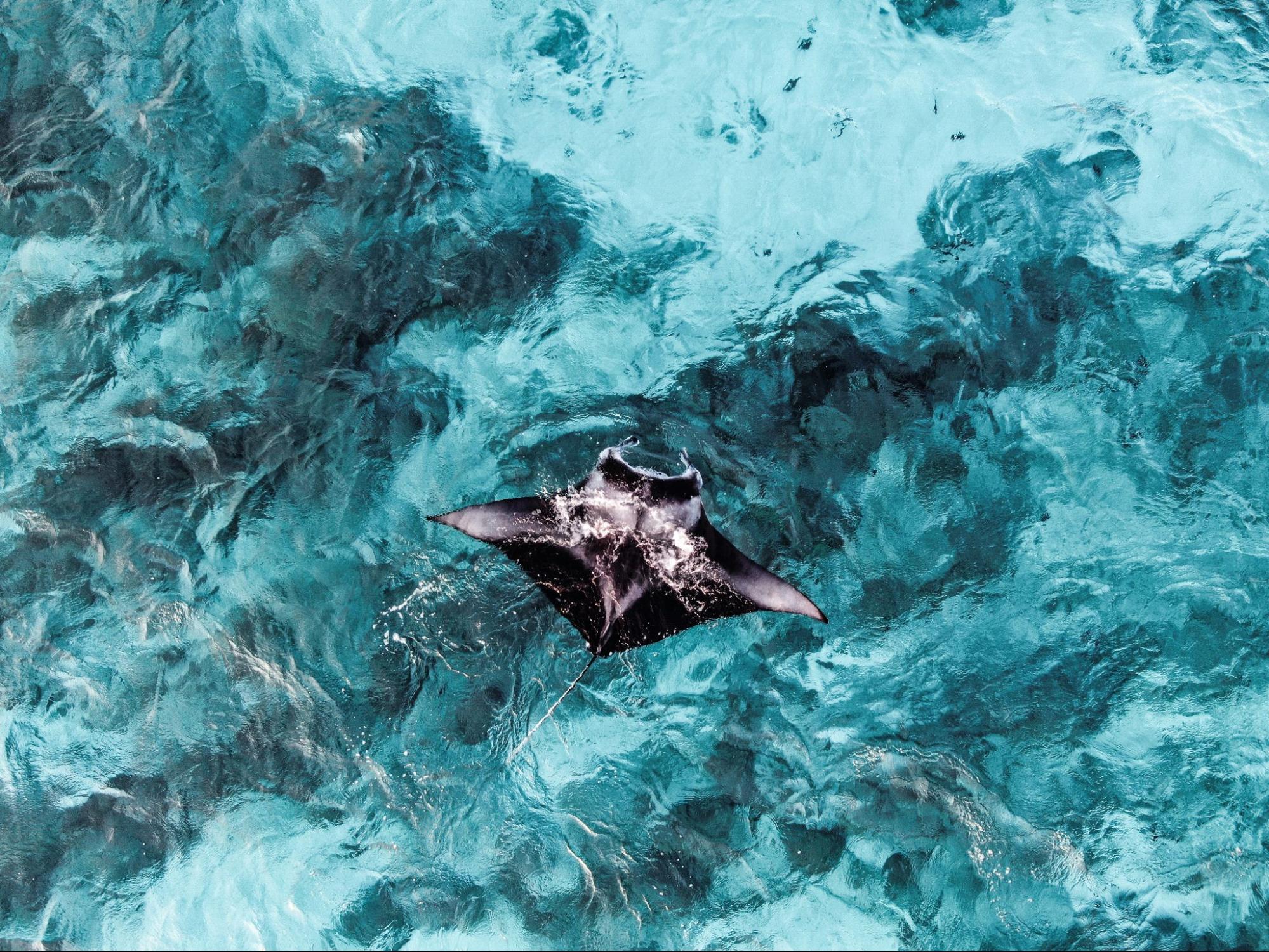
Manta ray encounters depend heavily on location, conditions, and timing. Some sites offer calm, predictable interactions at cleaning stations, while others involve strong currents or night dives where mantas feed under artificial light.
If you are planning a manta-focused trip, choosing the right destination and understanding the dive conditions is key.

Maldives (Year-Round Manta Encounters)
The Maldives is one of the most consistent places to see reef manta rays , especially at cleaning stations.
- Best areas: Baa Atoll (Hanifaru Bay), Ari Atoll
- Season: May to November (west side), December to April (east side)
- Conditions: Warm water (27–30°C), moderate to strong currents
- Depth: Typically, 10–25 meters
- Experience level: Intermediate, due to currents
Hanifaru Bay is a protected site where large seasonal feeding events occur, often snorkel-only.
Hawaii (Manta Night Diving)
Hawaii, particularly Kona, offers one of the most reliable manta ray night dives in the world.
- Season: Year-round
- Conditions: Calm seas, limited current, night diving setup
- Depth: Around 10–15 meters
- Experience level: Beginner to intermediate (must be comfortable with night diving)
Divers remain stationary while lights attract plankton, drawing mantas close as they feed. Sightings are highly consistent.
Indonesia (Komodo & Nusa Penida)
Indonesia offers some of the most dynamic manta ray encounters.
Komodo National Park
- Strong currents, drift diving common
- Large manta populations at sites like Manta Point
- Experience level: Intermediate to advanced
Nusa Penida (Bali)
- Cooler water (20–26°C), surge and currents
- Year-round manta sightings
- Cleaning stations and feeding areas
These locations offer both cleaning station encounters and active feeding behavior.

Socorro Islands, Mexico
Socorro is known for larger oceanic manta rays and highly interactive encounters.
- Season: November to May
- Conditions: Open ocean, variable currents, deeper dive profiles
- Depth: 15–40 meters
- Experience level: Advanced
Mantas here are known to approach divers closely, but conditions can be unpredictable. Trips are typically liveaboard-based.
Thailand (Similan Islands & Koh Bon)
Thailand offers seasonal manta sightings with generally easier conditions.
- Season: November to April
- Conditions: Warm water, moderate currents, good visibility
- Depth: 15–30 meters
- Experience level: Beginner to intermediate
Encounters are less predictable than in Hawaii or the Maldives, but conditions are more accessible.
What Makes a Strong Manta Ray Location
Manta rays are typically found in areas with:
- Cleaning stations, where they return repeatedly
- High plankton concentration, which attracts feeding behavior
- Current flow, which brings nutrients but increases dive difficulty
The best locations combine consistent sightings with manageable conditions and experienced operators.
Types of Manta Ray Encounters
- Cleaning stations: Predictable, slower-paced interactions
- Feeding events: More dynamic, often influenced by plankton blooms
- Night dives: Controlled environments where mantas feed under lights
Each type offers a different experience depending on location.
Conditions That Matter
Manta diving often involves:
- Moderate to strong currents in many locations
- Variable visibility due to plankton
- Surge in shallow cleaning stations
Good buoyancy control is essential, especially when staying low and still near cleaning sites.
Safety and Experience Level
Manta rays are harmless and do not have stingers, unlike stingrays. However, dive conditions can still be challenging.
- Night dives require comfort in low visibility
- Drift dives require control in current
- Some sites involve surge and changing conditions
Many beginner-friendly options exist, but not all manta destinations are suitable for new divers.
Cost and Practical Considerations
- Hawaii night dives: ~$120–$200 per dive
- Maldives dives: often part of resort or liveaboard packages
- Socorro liveaboards: significantly higher due to remote access
Additional costs may include:
- Marine park fees
- Equipment rental
- Nitrox (in some locations)
Booking in advance is recommended for high-demand sites.
Responsible Interaction
To protect manta rays:
- Maintain distance and stay low near cleaning stations
- Do not touch or chase
- Avoid blocking their path
- Follow dive guide instructions
Poor diver behavior can disrupt cleaning and feeding patterns.
Conclusion
The best manta ray destination depends on the type of experience you want.
For consistent, controlled encounters, Hawaii stands out. For natural cleaning stations and seasonal aggregations, the Maldives is a strong choice. For more challenging conditions and larger oceanic mantas, Socorro offers a different level of experience.
Understanding the conditions and dive style is what ultimately defines a successful manta ray trip.

FAQs
Are manta rays dangerous?
No. Manta rays are harmless and do not have stingers.
Do I need advanced diving skills?
Not always. Some locations are beginner-friendly, but others require experience with currents or night diving.
Can I see manta rays all year round?
In some destinations like Hawaii, yes. In others, sightings are seasonal.
What should I bring?
Standard dive gear, a dive light for night dives, and an underwater camera if desired.
DiveBookings.com is a trusted platform for scuba diving trips, courses, and global dive experiences. Our editorial team works closely with certified dive professionals and verified


