

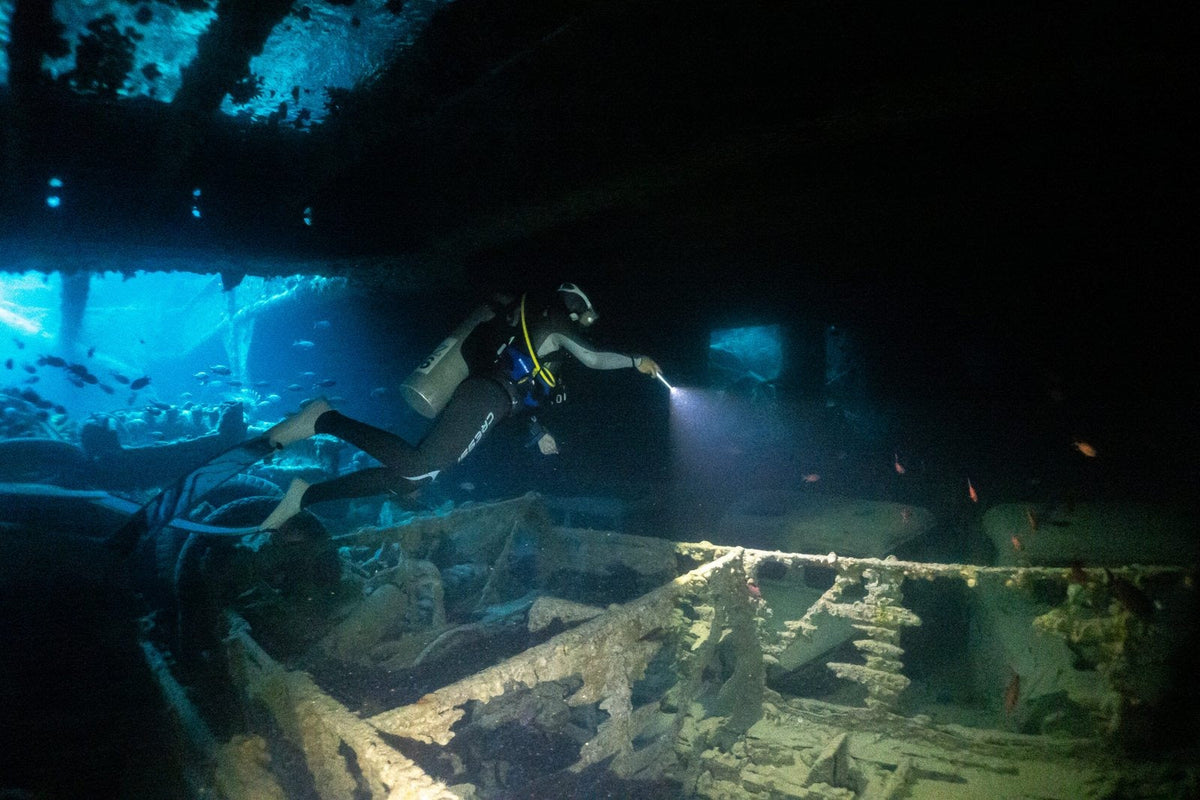
The Red Sea is one of the world's most fascinating destinations for wreck divers. Beneath its warm, clear waters lie historic shipwrecks surrounded by coral reefs and marine life. Some are relatively accessible, while others require advanced training, experience, and careful planning.
For divers interested in maritime history and underwater exploration, wreck diving Red Sea offers an opportunity to see vessels that have become part of the marine ecosystem. Rusting structures provide shelter for fish, corals, and other organisms, creating an unusual combination of history and nature.
From the famous SS Thistlegorm to lesser-known wrecks around the Egyptian coast, the Red Sea offers wreck experiences for a wide range of certified divers.

Why Is Wreck Diving in the Red Sea Special?
Several factors make the Red Sea particularly attractive for wreck diving.
The region is known for relatively warm water, impressive visibility, extensive coral reefs, and abundant marine life. These conditions can make underwater exploration especially rewarding.
Wrecks also add another dimension to a normal reef dive. Instead of simply observing a natural environment, divers can explore the remains of vessels, including decks, cargo areas, machinery, and other surviving structures.
Over time, many wrecks become artificial reefs. Corals and sponges colonise their surfaces, while fish use the structures for shelter.
This means a single dive can combine history, photography, marine biology, and exploration.
SS Thistlegorm: The Red Sea's Iconic Wreck
One of the most famous wrecks in the region is the SS Thistlegorm, located in the northern Red Sea.
The British armed merchant ship was sunk during World War II in 1941. Today, it is renowned for its remarkably interesting cargo and underwater structure.
Divers can encounter motorcycles, trucks, railway carriages, boots, spare parts, and other wartime supplies among the surviving cargo.
The wreck is also home to marine life, with schools of fish frequently seen around the structure.
Because of its depth, currents, penetration opportunities, and complex environment, divers should have appropriate experience before attempting more demanding sections of the wreck.
For many experienced divers, visiting the Thistlegorm is a highlight of a Red Sea diving itinerary.
Abu Nuhas Shipwrecks
Another major wreck-diving area is Abu Nuhas, a reef system in the northern Red Sea.
Several ships have been wrecked in this area, creating multiple opportunities for exploration.
Among the better-known wrecks are the Giannis D, Carnatic, Chrisoula K, and Seastar.
Each wreck has its own characteristics, history, depth profile, and level of accessibility.
The Giannis D, for example, is well known among recreational wreck divers and offers interesting structural features. The Carnatic is an older wreck with a long history beneath the sea and has become heavily integrated into the surrounding marine environment.
Conditions can vary, and currents may be present. Divers should always follow the briefing provided by their guide.
Dunraven Wreck
The Dunraven is another historic Red Sea wreck and one of the area's well-known dive sites.
The British steamship sank in 1876 after striking the reef at Beacon Rock. Today, its remains lie underwater and are covered with marine growth.
Compared with some of the deeper or more technically demanding wrecks in the Red Sea, the Dunraven can be accessible to appropriately qualified recreational divers, depending on current conditions and the dive plan.
Its combination of wreck structure and marine life makes it appealing to underwater photographers.
Salem Express
The Salem Express is one of the most sensitive wrecks in the Egyptian Red Sea.
The passenger ferry sank in 1991 near Safaga, resulting in a major loss of life. Because of the circumstances surrounding the disaster, the wreck should be approached with respect.
Divers visiting the site should remember that it is not simply an underwater attraction. It is a maritime memorial associated with a human tragedy.
The wreck may be accessible to suitably qualified divers, but responsible operators emphasise respectful behaviour and appropriate conduct.

What Can You See on Red Sea Wrecks?
One of the pleasures of wreck diving Red Sea is discovering how quickly marine life can transform artificial structures.
Wrecks may be covered by corals, sponges, algae, and other marine organisms. Schools of fish often gather around them, while smaller creatures occupy cracks and sheltered areas.
Depending on the location, divers may encounter:
- Snappers
- Barracuda
- Groupers
- Moray eels
- Butterflyfish
- Angelfish
- Lionfish
- Turtles
- Reef sharks
- Rays
The exact species vary between dive sites and seasons.
A wreck dive therefore offers more than a historical exploration. It can also be a productive marine-life dive.
Recreational vs. Technical Wreck Diving
Not every wreck should be approached in the same way.
Some Red Sea wrecks can be explored comfortably within recreational diving limits. Others involve greater depth, overhead environments, strong currents, or complicated internal structures.
Technical divers may explore deeper sections or undertake more complex penetration dives, but this requires specialised training, equipment, gas planning, and experience.
Recreational divers should never enter a wreck simply because an opening looks accessible.
Overhead environments create additional hazards, including restricted exits, silt, entanglement, disorientation, and reduced visibility.
If you are interested in wreck penetration, complete appropriate wreck-diving training before attempting it.
What Certification Do You Need?
Certification requirements vary according to the wreck and dive operator.
Many recreational wreck dives can be conducted by appropriately certified divers with sufficient experience. Deeper wrecks or penetration dives may require advanced or technical qualifications.
Before booking, provide accurate information about your certification and recent diving experience.
A responsible dive centre will recommend sites appropriate for your abilities rather than encouraging you to attempt a dive simply because it is famous.
If you have limited wreck-diving experience, consider taking a recognised wreck-diving course before attempting penetration.
Visibility and Water Conditions
The Red Sea is famous for clear water, but visibility is never guaranteed.
Conditions can change depending on weather, currents, plankton, boat traffic, and local factors.
Currents can also be an important consideration around wrecks and offshore reefs.
A strong current can make entry, descent, navigation, and ascent more demanding. Divers should pay close attention to the dive briefing and understand the planned entry and exit procedures.
Even experienced divers should not underestimate local conditions.
Wreck Diving Safety
Safety becomes particularly important when exploring underwater structures.
Before a wreck dive, check your equipment carefully and complete a buddy check.
During the dive, maintain good buoyancy and avoid unnecessary contact with the wreck or surrounding coral.
If entering a wreck, use appropriate equipment and follow your training. Never penetrate beyond the limits of your certification or experience.
A guideline may be necessary for more complex penetration dives, and divers should always have an appropriate exit strategy.
Other important considerations include monitoring air or gas supply, depth, bottom time, and decompression requirements.
Remember that a wreck is an environment, not a challenge to conquer.

Best Way to Explore Red Sea Wrecks
Many of the Red Sea's famous wrecks can be accessed through day boats or liveaboards, depending on their location.
Liveaboards are particularly useful for divers who want to visit multiple wrecks and offshore sites during one trip.
They reduce repeated transfers from shore and provide more time for diving.
Day boats can be more convenient for travellers staying in coastal resorts and wanting a shorter diving schedule.
When comparing trips, look beyond the number of dives advertised. Consider the itinerary, boat quality, group size, guide experience, equipment, transfers, meals, marine fees, and whether the trip is suitable for your certification level.
Wreck Photography Tips
Wrecks can be spectacular subjects for underwater photography.
Large structures provide opportunities for wide-angle compositions, while smaller details such as machinery, marine life, and historical features work well for close-up images.
Good buoyancy is essential when taking photographs. Divers should avoid holding onto the wreck or resting on coral to stabilise themselves.
Natural light can produce dramatic results in shallow sections, while artificial lights may help reveal colours at greater depth.
Most importantly, photography should never interfere with safe diving or responsible interaction with the site.
Respect the History
Wreck diving is not treasure hunting.
Divers should never remove artefacts, disturb cargo, break pieces from the wreck, or damage marine growth.
Historic wrecks are underwater cultural heritage sites, and many have considerable archaeological or historical importance.
Some wrecks, particularly those associated with loss of life, deserve additional sensitivity.
A professional approach means observing the site without altering it.
Final Thoughts
Wreck diving Red Sea provides an extraordinary opportunity to combine underwater history with marine exploration. From the famous SS Thistlegorm and Abu Nuhas wrecks to the Dunraven and other historic sites, the region offers experiences for appropriately trained recreational and technical divers.
The key is to choose wrecks that match your certification and experience, understand the conditions, use a reputable operator, and never exceed your training.
A great wreck dive is not about going deeper or penetrating farther. It is about exploring responsibly, understanding the history of the site, and appreciating the marine life that has made the wreck its home.
For divers who approach these sites with preparation and respect, the Red Sea's wrecks can reveal a fascinating world beneath the waves.
FAQs
1. Is wreck diving in the Red Sea suitable for beginners?
Some shallow wrecks may be suitable, but beginners should choose sites recommended by qualified instructors.
2. What is the most famous Red Sea wreck?
The SS Thistlegorm is one of the Red Sea's most famous and frequently visited wrecks.
3. Do I need special certification for wreck diving?
It depends on the site. Recreational dives may require basic certification, while penetration and deeper dives require additional training.
4. Can I enter Red Sea wrecks?
Only if the wreck and dive plan allow it and you have appropriate wreck-penetration training and equipment.
5. What marine life can I see on wrecks?
Wrecks can attract reef fish, moray eels, groupers, barracuda, turtles, rays, and other marine species.


