

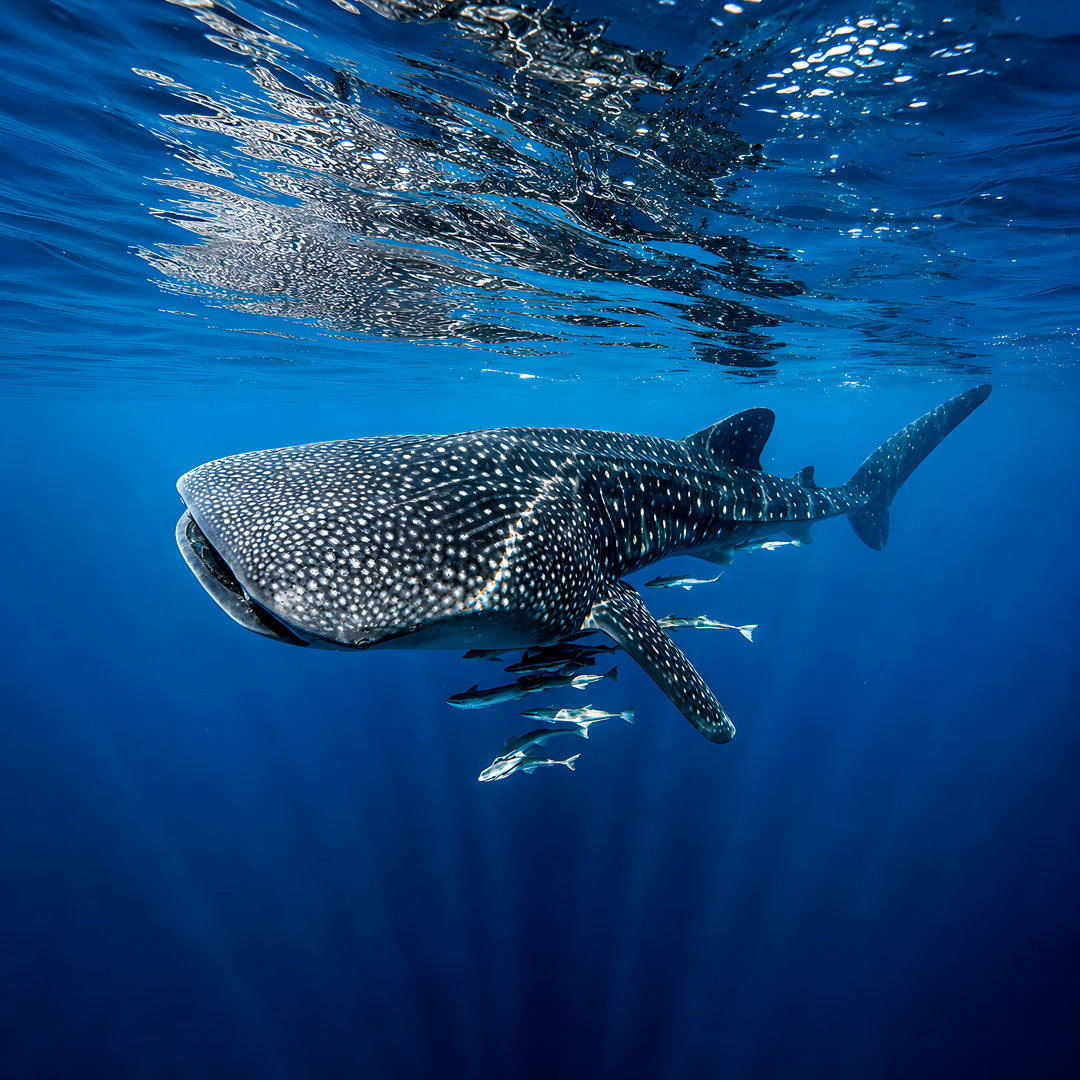
Few underwater encounters compare with the sight of a whale shark gliding peacefully through clear tropical water. Despite their enormous size, these gentle giants are filter feeders and are generally not a threat to divers. For underwater enthusiasts, encountering one can become the defining moment of a Thailand diving holiday.
Whale shark diving Thailand is particularly appealing because the country combines warm waters, colourful reefs, dramatic underwater formations, and several locations where whale sharks are occasionally encountered. However, whale shark sightings are never guaranteed. The experience depends on season, location, ocean conditions, and the unpredictable movements of these magnificent animals.

Why Whale Sharks Are So Fascinating
Whale sharks are the largest known fish in the world. They can grow to enormous lengths and are recognisable by their broad heads, distinctive spotted patterns, and enormous mouths.
Despite their appearance, whale sharks are not aggressive predators. They primarily feed by filtering plankton and other tiny organisms from the water.
For divers, their size creates an extraordinary contrast. A whale shark can move calmly through the water while much smaller fish swim around it. Watching such a large animal move effortlessly underwater gives divers a completely different perspective on the marine environment.
The best encounters are usually those where the diver remains calm, maintains distance, and allows the animal to determine the direction of the interaction.
Where to Experience Whale Shark Diving in Thailand
Thailand has several diving destinations associated with whale shark sightings. Two of the most well-known areas are Koh Tao and Koh Phi Phi, while offshore sites such as Chumphon Pinnacle and Hin Daeng and Hin Muang are also known for encounters with large pelagic species.
Koh Tao
Koh Tao is one of Thailand's best-known diving destinations and is especially popular with beginners and recreational divers.
Chumphon Pinnacle, located offshore from Koh Tao, is a renowned dive site featuring underwater rock formations and a variety of marine life. Whale sharks are occasionally encountered here, although sightings can never be promised.
The site can involve currents and deeper sections, so divers should follow the recommendations of their dive guide and ensure their experience and certification are appropriate for the conditions.
Koh Phi Phi
The waters around Koh Phi Phi offer colourful coral environments, limestone formations, and abundant marine life. Whale shark encounters are possible, although they are less predictable than the reef and fish sightings divers commonly experience.
The region is also popular because diving can easily be combined with a broader island holiday.
Hin Daeng and Hin Muang
Located in the Andaman Sea, Hin Daeng and Hin Muang are famous for dramatic underwater walls and encounters with pelagic marine life.
These sites are generally better suited to experienced divers because conditions can include stronger currents and deeper diving. A trip to this area may provide opportunities to encounter whale sharks, manta rays, and other large marine species.
When Is the Best Time for Whale Shark Diving?
There is no month when whale shark sightings are guaranteed in Thailand.
Seasonal patterns can influence where whale sharks are encountered, but these animals are wild and highly mobile. Their presence depends on food availability, ocean conditions, currents, and other environmental factors.
For this reason, responsible dive operators should describe whale shark encounters as a possibility rather than a certainty.
Before booking a trip, ask the operator about recent sightings and typical seasonal conditions. Current local information can be much more useful than relying solely on a general annual calendar.

What Is a Whale Shark Dive Like?
The experience can begin long before entering the water.
After reaching the dive site, the crew usually provides a briefing covering the expected conditions, entry procedure, depth, current, route, and safety considerations.
Once underwater, divers may initially see nothing unusual. Whale sharks can appear suddenly, sometimes at a distance, before slowly approaching the reef or moving through open water.
The first sighting can be overwhelming. Their size becomes increasingly apparent as the animal approaches.
The best response is to stay calm, control buoyancy, maintain a respectful distance, and avoid chasing the shark.
A good encounter does not require touching or following the animal. Simply watching it pass naturally through the water can be an unforgettable experience.
Responsible Interaction Matters
Wildlife encounters should always prioritise the animal's welfare.
When participating in whale shark diving Thailand, divers should follow the instructions of their guide and avoid attempting to touch, ride, block, or chase a whale shark.
Maintaining appropriate distance gives the animal room to move naturally and reduces unnecessary stress.
Divers should also practise good buoyancy control. Accidentally contacting coral or other marine life can damage fragile reef ecosystems.
Underwater photography should also be approached responsibly. Avoid crowding the animal simply to get a closer photograph.
The best photograph is never worth disturbing wildlife.
What Certification Do You Need?
Certification requirements depend on the dive operator and specific site.
Some whale shark dive locations may be accessible to certified recreational divers with appropriate experience. More challenging offshore sites may require stronger current skills, deeper-diving experience, or other qualifications.
Beginners should not assume that every whale shark location is suitable for their first dive.
If you are new to scuba diving, start with a beginner-friendly dive or certification course. Once you have developed your buoyancy, air-management, and underwater-awareness skills, you can consider more demanding dive sites.
Experienced divers should still follow the dive centre's briefing because local conditions can change from one day to another.

Visibility and Water Conditions
Thailand is famous for warm tropical water, but underwater visibility is not identical at every location or on every day.
Visibility can change because of weather, currents, plankton concentrations, rainfall, tides, and other environmental factors.
Interestingly, the conditions that attract whale sharks can sometimes affect visibility. Plankton-rich water can provide an important food source while making the water less clear.
This means divers should not judge a successful whale shark dive solely by photographic visibility.
Seeing a whale shark in slightly reduced visibility can still be an extraordinary encounter.
What Should You Bring?
Most dive operators provide essential scuba equipment, but requirements vary.
Divers should normally bring appropriate swimwear, a towel, reef-conscious sun protection, certification information if applicable, and any personal dive equipment they prefer.
An underwater camera can be useful, but it should never distract you from monitoring your depth, air supply, buddy, and surroundings.
If you are using a camera for the first time underwater, practise handling it without compromising your buoyancy or awareness.
Whale Shark Diving vs. Regular Reef Diving
Whale shark diving offers a very different experience from a standard reef dive.
On a reef dive, divers may spend much of their time examining corals, small reef fish, nudibranchs, crustaceans, and other marine life.
A whale shark encounter can shift attention toward open water and larger-scale movement.
However, divers should not enter the water expecting only one animal. Thailand's reefs and pinnacles can offer plenty to discover even when a whale shark does not appear.
This mindset makes the experience more enjoyable. Instead of treating the dive as a wildlife guarantee, see the whale shark as a potential highlight of a broader marine adventure.
Choosing a Dive Operator
Selecting the right operator is an important part of planning your trip.
Look for a dive centre that provides clear information about:
- Dive-site conditions
- Required certification and experience
- Group sizes
- Equipment rental
- Safety procedures
- Dive duration and maximum depth
- Boat transfers
- Weather-related changes
- Cancellation policies
A professional operator should be transparent about the possibility that whale sharks may not appear.
Ask whether the guides follow responsible wildlife-interaction practices and how they manage encounters when several boats or divers are present.
Why the Experience Stays With You
The appeal of whale shark diving goes beyond seeing a large animal.
There is something humbling about sharing the ocean with a creature that has evolved to survive in a completely different environment from our own.
When a whale shark moves silently through the water, the usual sense of scale disappears. The animal may seem impossibly large, yet its movement can be slow and graceful.
For many divers, that moment creates a deeper appreciation for marine conservation.
It also reinforces an important lesson: underwater wildlife should be observed, not controlled.
Final Thoughts
Whale shark diving Thailand offers the possibility of one of the world's most memorable underwater encounters. From Koh Tao and Chumphon Pinnacle to Andaman Sea dive sites such as Hin Daeng and Hin Muang, Thailand provides several opportunities to search for these remarkable animals.
But the most professional approach is to keep expectations realistic. Whale sharks are wild animals, and no responsible operator can guarantee a sighting.
Choose the destination and dive operator carefully, understand the conditions, respect wildlife, and focus on enjoying the entire underwater environment.
If a whale shark appears, give it space and savour the moment. If it does not, Thailand's reefs, pinnacles, walls, and marine life still offer an incredible diving experience.
FAQs
1. Where can I see whale sharks in Thailand?
Popular areas include Koh Tao, Chumphon Pinnacle, and several Andaman Sea dive sites.
2. Are whale sharks dangerous?
Whale sharks are generally considered gentle filter feeders and are not known for hunting divers.
3. Can beginners go whale shark diving?
Some sites may suit newer divers, but more challenging locations require appropriate certification and experience.
4. Can whale shark sightings be guaranteed?
No. Whale sharks are wild animals, so sightings are never guaranteed.
5. Can I touch a whale shark?
No. Divers should maintain a respectful distance and never touch, chase, or obstruct a whale shark.


